Explore how AI anxiety and digital overload are impacting mental health in today’s tech-driven world. Learn early warning signs and practical ways to cope.

Author • Speaker • Trained Counsellor
For media, speaking, podcast and general inquiries
Find more mental health content at: theroadtomentalwellness.com
Share this with someone who needs it

In an era where artificial intelligence and digital technology are advancing at lightning speed, our mental health is struggling to keep up. The promise of convenience and innovation is undeniable—but so is the cost. From endless notifications to growing fears about job displacement, the psychological toll of our digital age is becoming a global concern.
In this post, we explore the growing phenomenon of AI anxiety and digital overload, how they’re affecting our mental health, and what we can do to cope.

What Is AI Anxiety?
AI anxiety refers to the fear, uncertainty, and stress people feel about the rise of artificial intelligence. It’s driven by several key concerns:
- Job insecurity: Automation is replacing roles in everything from customer service to creative writing.
- Loss of human connection: As AI takes over interpersonal tasks (like customer support or even therapy), there’s a fear that real human relationships are being replaced.
- Surveillance and privacy concerns: Many are worried about how AI collects and processes personal data.
- Existential fears: Popular media and tech leaders often warn about runaway AI scenarios, adding to public unease.
This anxiety is subtle but powerful. It can manifest as stress, irritability, or a general sense of unease about the future. For some, it may even lead to depressive symptoms or feelings of helplessness.
Digital Overload: The Everyday Burnout
While AI anxiety stems from emerging technologies, digital overload is something most of us are already living with. We’re glued to our screens for work, news, social media, and entertainment. The constant flood of information can overwhelm our brains, leading to:
- Decreased attention spans
- Sleep disturbances
- Increased anxiety and depression
- Burnout and emotional fatigue
- Social isolation
The World Health Organization has already recognized burnout as an occupational phenomenon, and much of that burnout is linked to our “always-on” digital lifestyle.
How These Forces Intersect
AI and digital overload aren’t separate issues—they feed into each other. Here’s how:
- AI fuels content creation, making it harder to disconnect (think endless algorithm-fed TikToks or YouTube videos).
- Work expectations have increased with AI automation, creating pressure to be more productive and available 24/7.
- Misinformation and deepfakes driven by AI worsen anxiety, especially around global issues like climate change, war, and politics.
It’s a perfect storm for mental health challenges.

The Age of Division: How the Modern World Fuels the Mental Health Crisis
This post explores the rising social division and online toxicity driving today’s mental health crisis—and offers practical, compassionate solutions for healing.

Who’s Most at Risk?
Anyone can feel the effects, but certain groups are more vulnerable:
- Young adults and teens: They’re immersed in digital culture and face peer pressure, online bullying, and perfectionism.
- Freelancers and remote workers: Constant connectivity and AI-driven productivity tools blur the lines between work and life.
- Professionals in threatened industries: Writers, designers, coders, and even educators are worried about being replaced.
- Accessibility Statement
- Books by Jonathan Arenburg
- Ch 7 From Wired To Be Human:The Friendship Recession: Why We’re Lonelier Than Ever
- Cookie Policy (CA)
- Jonathan Arenburg: Author, Speaker, Trained Counsellor
- Listen to Our Articles
- Privacy Policy & Disclaimer
- Read Free Chapters: The Road To Mental Wellness
- Reviews for Jonathan Arenburg’s Books
- Share Your Book Review
- Speaking Engagements, Media Features, & Podcast Appearances
- Start Here | Jonathan Arenburg
- Terms and Conditions
- Thank You
- The Road to Mental Wellness Book
- Verified Contributions | Jonathan Arenburg — Author, Speaker, Counsellor
- What People Are Saying About The Road To Mental Wellness
- Wired to Be Human
- WIRED TO BE HUMAN – The Audiobook
How to Protect Your Mental Health in the AI Era
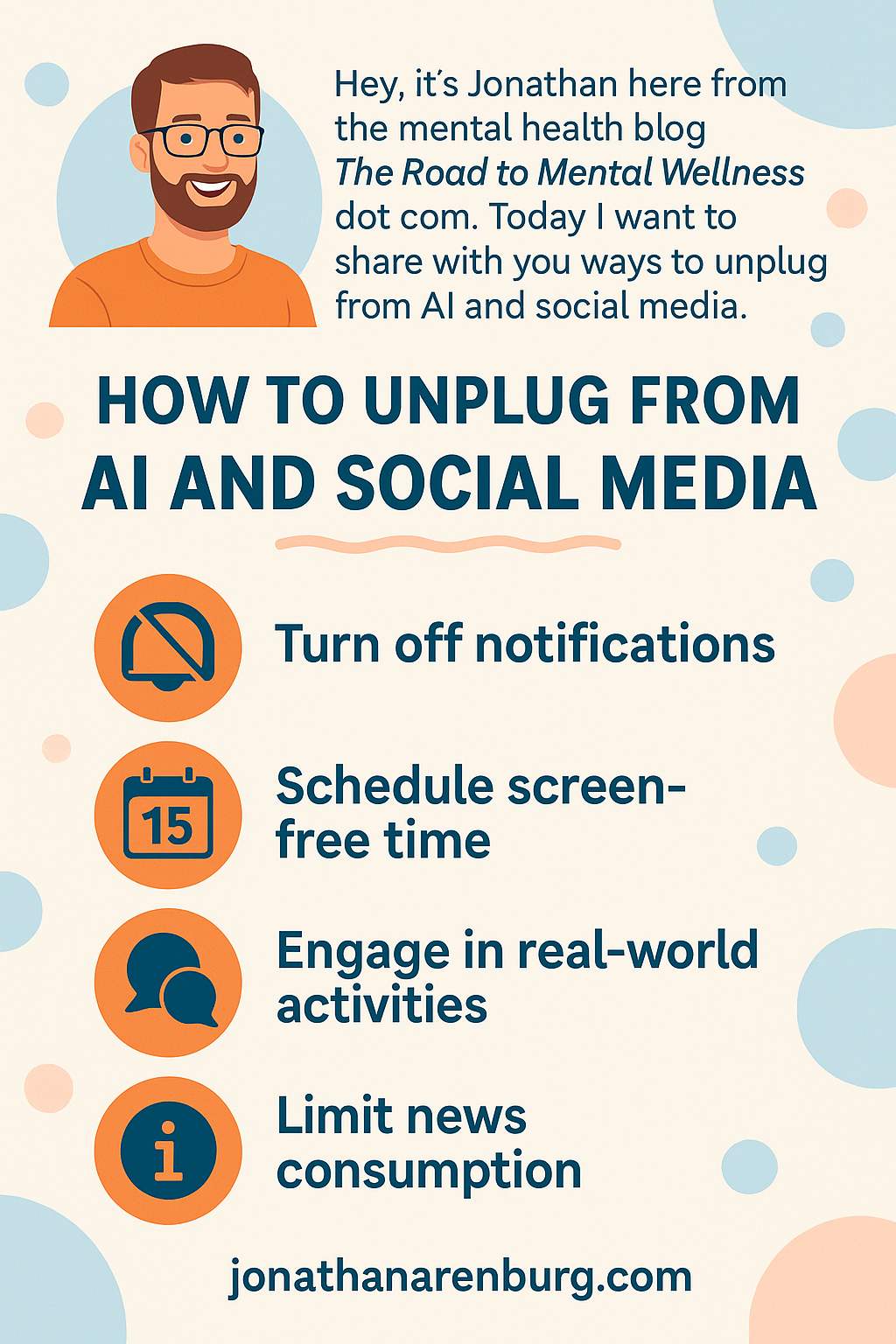
1. Set Digital Boundaries
- Turn off non-essential notifications.
- Schedule screen-free time (especially before bed).
- Use apps to limit social media usage.
2. Practice Mindful Tech Use
- Ask yourself: Is this helping me, or draining me?
- Choose intentional, meaningful content over mindless scrolling.
3. Embrace Real-World Connection
- Spend time with friends and family offline.
- Join local groups, volunteer, or attend community events.
4. Stay Informed—Not Overwhelmed
- Limit news consumption to once or twice a day.
- Choose reliable sources and avoid doomscrolling.
5. Advocate for Ethical AI
- Support organizations pushing for ethical tech and privacy protection.
- Push back against harmful policies and practices where you can—email your MP or join campaigns.
Hope in a High-Tech World
Technology isn’t inherently harmful. In fact, AI holds great promise for mental health—such as chatbots offering immediate support, apps improving access to care, and predictive models helping clinicians intervene early.
But we must balance innovation with intention. By creating healthy digital habits and staying connected to what really matters, we can protect our mental well-being—even in a world transformed by artificial intelligence.
Final Thought
We can’t stop the future from arriving—but we can shape how it affects us. AI and digital tech are tools. Let’s make sure they work for our mental health, not against it.
Watch
Instead
Related Posts from the Road To Mental Wellness